
When the farm becomes a power plant: what HarvRESt learned about mixing renewables and agriculture
Farms have always turned sunlight into something useful. Today that includes electricity, heat, gas and nutrient-rich by-products alongside food. HarvRESt has recently published the final version of the Mitigation Measures Catalogue, a practical stocktake of how renewable energy and agriculture fit together on the ground.
The catalogue takes the main renewable energy sources a European farmer might realistically consider (agrivoltaics, biogas from anaerobic digestion, onshore wind, thermochemical bioenergy and micro-hydropower) and works through their effects across four dimensions: agronomic, environmental, biodiversity and social. It then proposes concrete ways to keep the downsides in check. Each measure is tied to measurable indicators, so farmers and advisors can track whether it is working.
Solar, with crops underneath
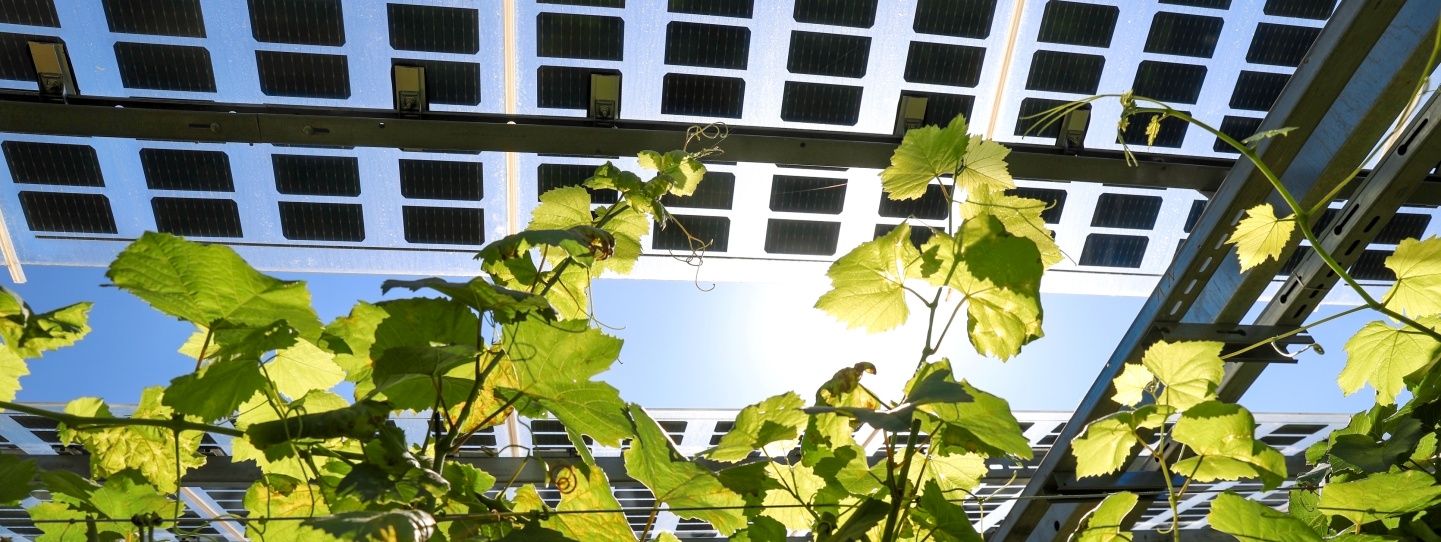
Agrivoltaics receives a lot of attention, and for good reasons. Panels overhead change the microclimate below them: less direct light, but also cooler daytime temperatures, higher soil moisture and lower evaporation. In hot, dry conditions this can be a real advantage. The report cites sharply higher cumulative CO₂ uptake in crops such as chiltepin pepper and cherry tomato, and a Spanish vineyard use case that cut irrigation needs by around 15%.
Design decides the outcome, however. Panel height, spacing and tilt all matter, as does the crop's tolerance for shade. Shade-sensitive crops such as soybeans or onions can suffer heavy losses under dense arrays. The report also covers the less obvious risks: soil compaction during construction, rainfall funnelled off panel edges, and knock-on effects for pollinators.
Biogas and the digestate puzzle
For anaerobic digestion, the agronomic story is less about the gas and more about the digestate. Digestate largely mirrors whatever went into the digester. Manure-based digestate is rich in ammonium and acts quickly as a fertiliser, but it is prone to ammonia losses. Straw-based digestate is heavy on solids and lignin.
The report highlights what it calls the Nitrate Vulnerable Zone paradox. Biogas plants tend to appear where the feedstock is, in livestock-dense regions, and these are often the very areas already capped at 170 kg N per hectare under the Nitrates Directive. The places best placed to produce digestate are therefore frequently the least able to spread it legally. The catalogue treats nitrogen export and nutrient recovery as core requirements, and points to the RENURE criteria as a possible route forward.
Wind: small footprint, a few surprises
Onshore wind occupies very little of the land it sits on. Farming carries on around the turbines, and water use is minimal compared with almost any other energy source. The report still takes the concerns seriously. Construction can compact soil and disturb habitats, and large turbines can raise local air temperatures by a degree or more. Some findings are unexpected: earthworm abundance drops near big turbines, apparently because of ground vibration. Birds and bats need careful planning too, although the evidence suggests many species learn to navigate around the structures. Social acceptance largely comes down to noise, visual impact and whether local people share in the benefits.
Bioenergy and the carbon balance
Thermochemical bioenergy (combustion, pyrolysis, gasification and similar processes) offers something the others cannot: steady, controllable power that fills the gaps when the wind drops and the sun sets. Its sustainability hinges on where the biomass comes from. The report's advice is to prioritise residues over dedicated energy crops, keep harvest below the rate at which forests and fields regrow, and watch for soil erosion, nutrient depletion and air pollution from poorly maintained equipment. Used well, bioenergy supports biomass management, reduces wildfire risk and sustains rural supply chains. Pushed too hard, it erodes the benefits it was meant to deliver.
Micro-hydro: only if the water is already there
Small on-farm hydropower systems, including micro-pumped hydro storage that pairs well with solar, can be a cost-effective way to store energy and cut diesel use for irrigation, provided the farm already has a dam or an existing water right. Building a new reservoir just to make the system work undermines both the economics and the ecology. The catalogue therefore presents micro-hydro as a retrofit option rather than a from-scratch investment.
What to take away
None of these impacts are fixed. Whether a technology helps or harms depends on the site, the design and the management, which is why the catalogue puts so much weight on monitoring, adaptive management and early dialogue between developers and farmers. The indicators were chosen to stay within reach of a working farm: some can be observed or measured in the field, while the rest rely on the routine soil, manure and water analyses that farmers already commission from external laboratories, and that they are often obliged to carry out anyway to comply with fertilisation and quality regulations. Nothing here calls for research-grade methods. An annex lists biomethane potentials for a range of feedstocks.
“None of these technologies is good or bad for a farm in the abstract, the outcome is decided by the site, the design and the day-to-day management. What we’ve tried to do is turn that into something usable: pair each impact with a mitigation measure, and each measure with an indicator a land manager can actually follow up on. That’s what lets renewables and farming reinforce each other rather than compete.”
— Sandra Galea Outón, Researcher, UVic-UCC (BETA)