Insights from the First HarvRESt Multistakeholder Visioning Policy Lab
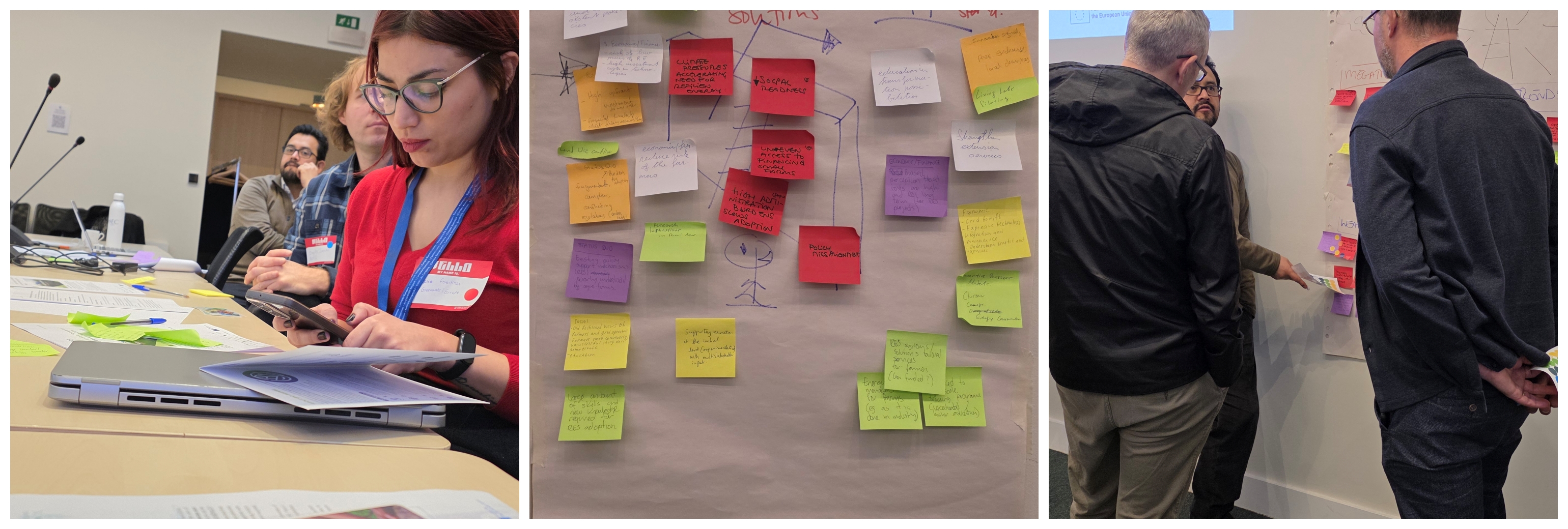
On 18 December 2025, the HarvRESt project hosted its first Multistakeholder Visioning Policy Lab at the CEPS building in Brussels.
This in person workshop is the first of a three part Policy Lab series designed and managed by HEC Paris to co create a shared vision for how renewable energy solutions can transform Europe’s agri food and rural sectors. The session brought together research and academic stakeholders for a four hour participatory exercise using Systems Thinking, Future Thinking, and the Visual Toolbox for Systems Innovation.
Exploring Systemic Change in Farming and Energy
HarvRESt adopts a systemic perspective on the future of farming, recognising the interconnections between land use, energy, water, climate, economic incentives, governance structures and social dynamics. This first workshop explored these interdependencies with the aim of identifying signals of change and early trends shaping the farming–energy link across Europe.
Participants highlighted interesting signs of a structural transformation, including:
- Farms increasingly evolving from energy users to energy producers
- Growing interest in agrivoltaics and dual land use models
- Momentum behind decentralised and cooperative energy systems
- Rising climate pressures influencing land viability and farm productivity
- The emergence of farms as hubs of resilience, innovation and territorial regeneration
- A shift towards energy sufficiency and efficiency, reducing consumption while optimising production from renewable energy
Together, these signals point to a future in which farms are active contributors to Europe’s clean energy transition while improving local resilience.
Long-term Coherence: The Critical Policy Enabler
A recurring insight across the workshop was the central importance of long term policy coherence. Participants emphasised that meaningful transformation cannot happen without:
- Predictable, stable, and integrated long term policy frameworks
- Market incentives that reflect both environmental and societal value
- Human centred and ecologically grounded design principles for future policy instruments
The message was clear: systemic transformation requires policies that align economic, social and environmental priorities. Without coherence across these domains, change risks being fragmented or unsustainable.
The first Steps Towards a Vision
Although the workshop did not conclude with a formal vision, the participants converged around a shared future direction:
“Farms as resilient, energy-producing, climate-positive hubs, embedded in cooperative energy systems, supported by stable policy frameworks, and enabled by technologies that regenerate land, water and communities.“
This emerging vision provides the foundation for the next phase of the Policy Lab process.
Next Steps: Policymaker Visioning Workshop (March 2026)
Building on the insights generated in Brussels, the next Policy Lab session will take place online on 26 March 2026, engaging European policymakers and institutional stakeholders. This upcoming workshop will ensure that the emerging vision is not only ambitious, but also feasible, policy relevant, and aligned with Europe’s regulatory landscape.