HarvRESt partners meet in Lleida for two days of collaboration and field insights
From 18–19 March 2026, the HarvRESt consortium met in Lleida, Spain, for two days of collaboration, knowledge exchange, productive discussions, workshops and site visits hosted by SORIGUÉ and Viñas del Vero.
The first day of the meeting, which was hosted by Sorigué, featured project updates and strategic discussions on:
- Engaging farmers and local actors in agro communities
Exploring strategies to involve multiple stakeholders, increase social acceptance of renewable energy solutions and co create new business models that benefit rural communities. - Advancing sustainable practices in agriculture
Discussing nutrient recovery, improved crop footprint methodologies, the use of renewable energy technologies in farming, and new digital services for agricultural communities. - Developing advanced energy models and smart systems
Working on tools that help define optimal renewable energy operations and maximise energy performance using intelligent algorithms. - Designing HarvRESt’s Virtual Power Plant and Decision Support System
Co-creating user centred solutions with farmers and partners to support decision making in future agro communities. - Policy guidance and future deployment
Sharing strategies for supporting EU-policy development and identifying future communities ready for wider deployment and scaling. - Communication, dissemination and exploitation
Ensuring that HarvRESt knowledge, opportunities and insights reach farmers, industry, policymakers and wider European stakeholders.
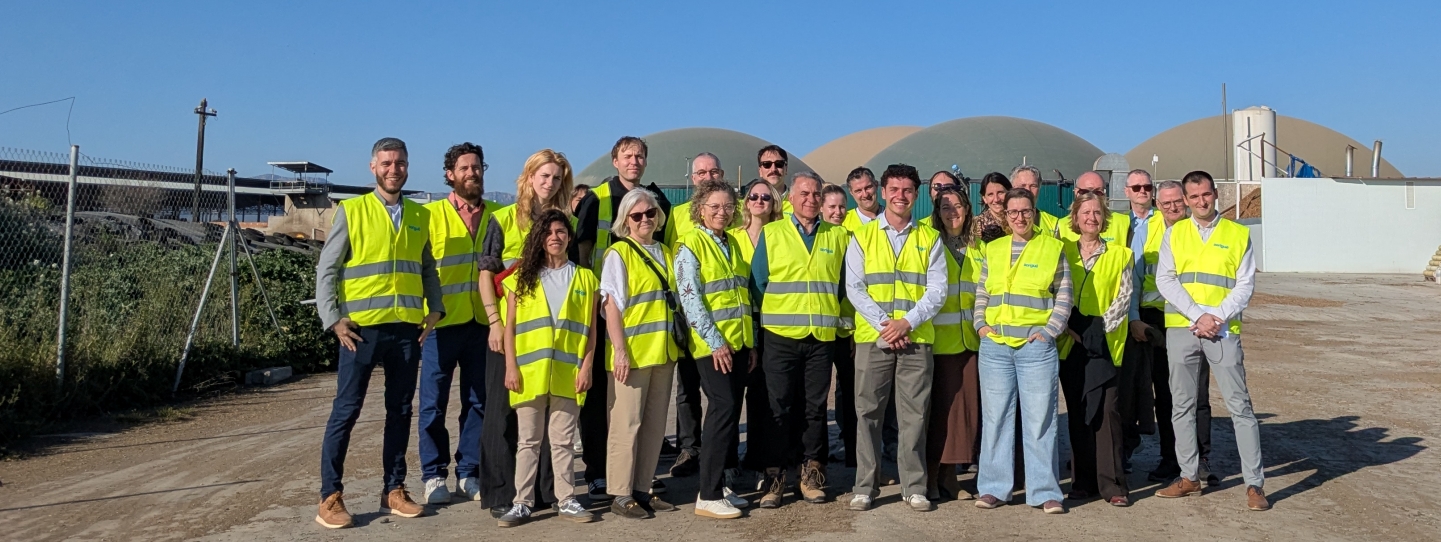
The day concluded with a visit to the Torre Santamaría biomethane plant, offering valuable real world perspectives on innovative agricultural and renewable energy solutions.
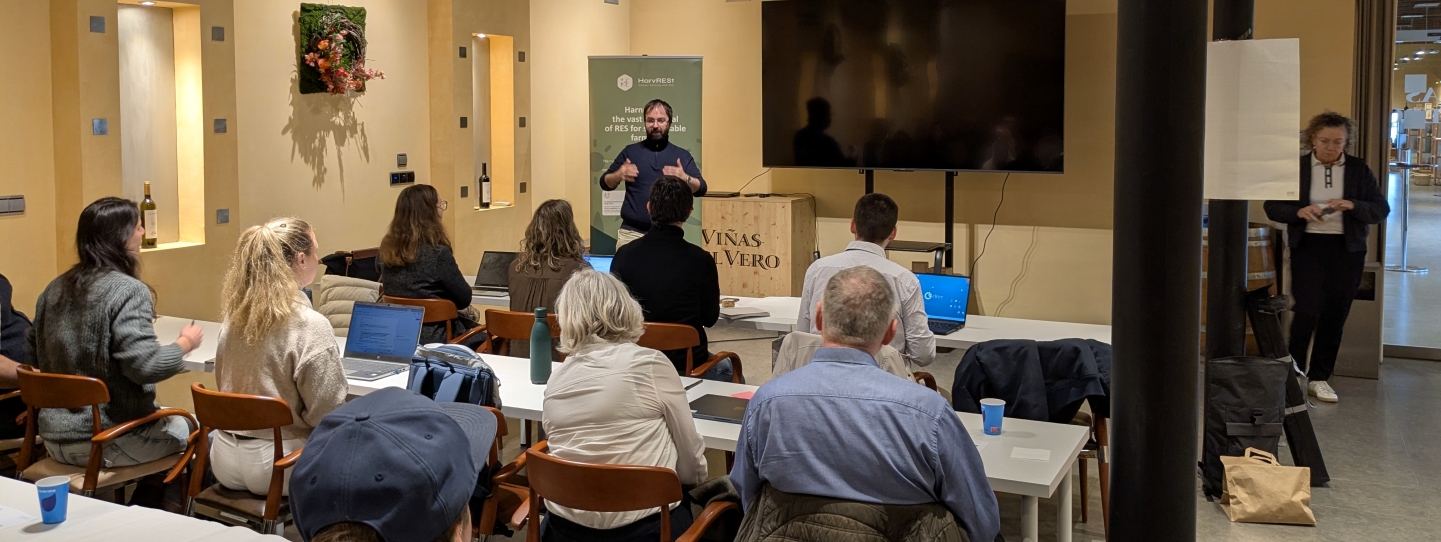
The second day of the HarvRESt partner meeting took us to the beautiful surroundings of Viñas Del Vero. The day featured two hands on workshop sessions:
- Replication workshop led by Climate KIC
Exploring how HarvRESt solutions can be transferred, adapted and scaled to agricultural communities across Europe. - Co creation workshop led by BETA Technological Centre
Aimed at ensuring a shared approach to the stakeholder engagement activities planned in the coming months.
The programme concluded with an inspiring tour of Viñas del Vero, offering real world insights into how renewable technologies and sustainable practices can be integrated directly into agricultural operations.
Highlights included:
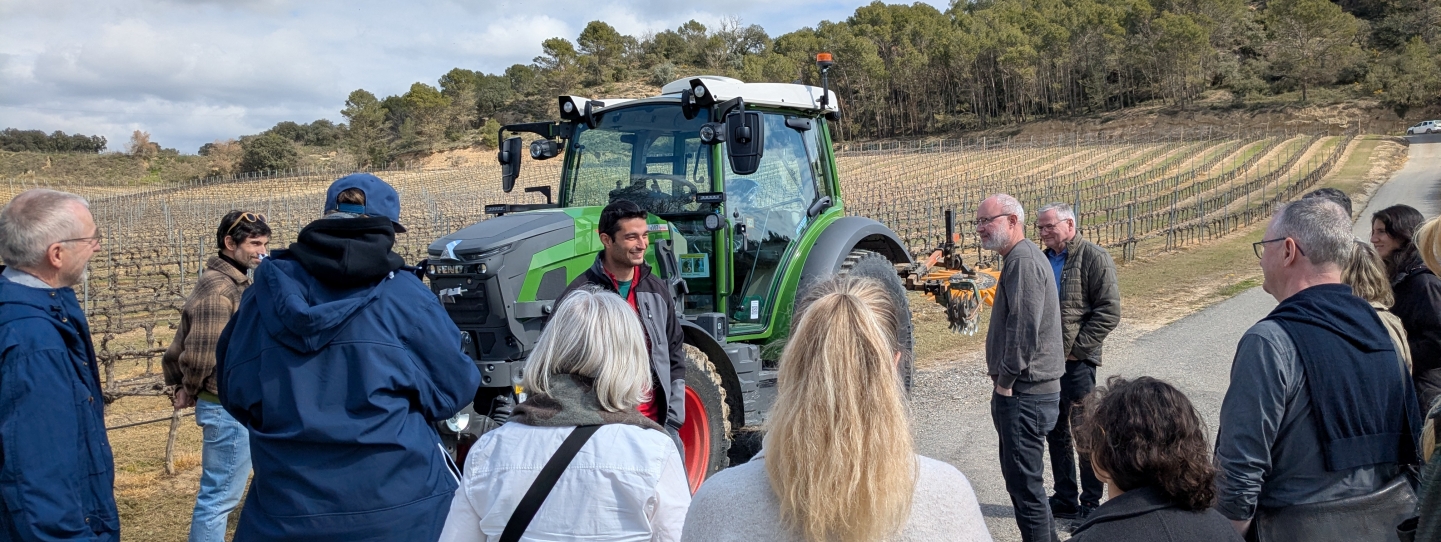
- A fully electric tractor - used for vineyard maintenance and field operations, with an effective working time of around eight hours.
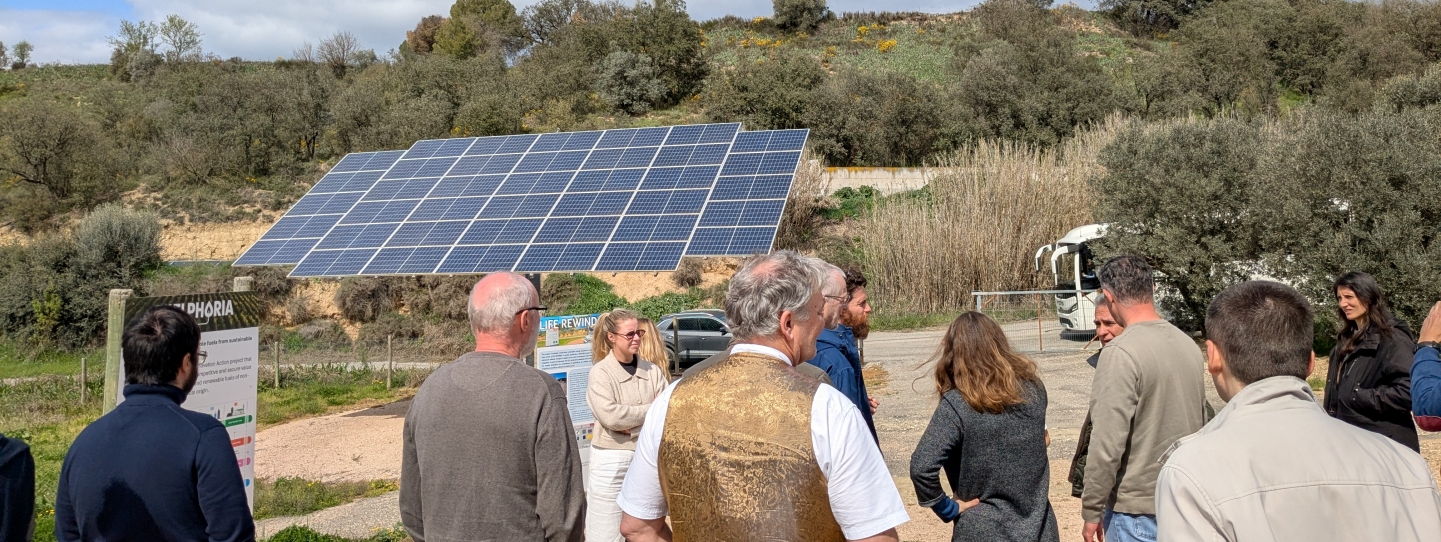
- Solar power in action - solar panels on-site include rotating panels that follow the movement of the sun, as well as fixed installations placed on top of a sand filter used for water treatment.
- Water recycling for vineyard irrigation - process water from wine production is treated and reused to irrigate the vineyards — a good example of circular resource use in practice.
_
_